
Vertical pull
Lat pulldown
Vertical pulling with adjustable load. The route to your first pull-up and a way to add volume when the bar alone is not enough.
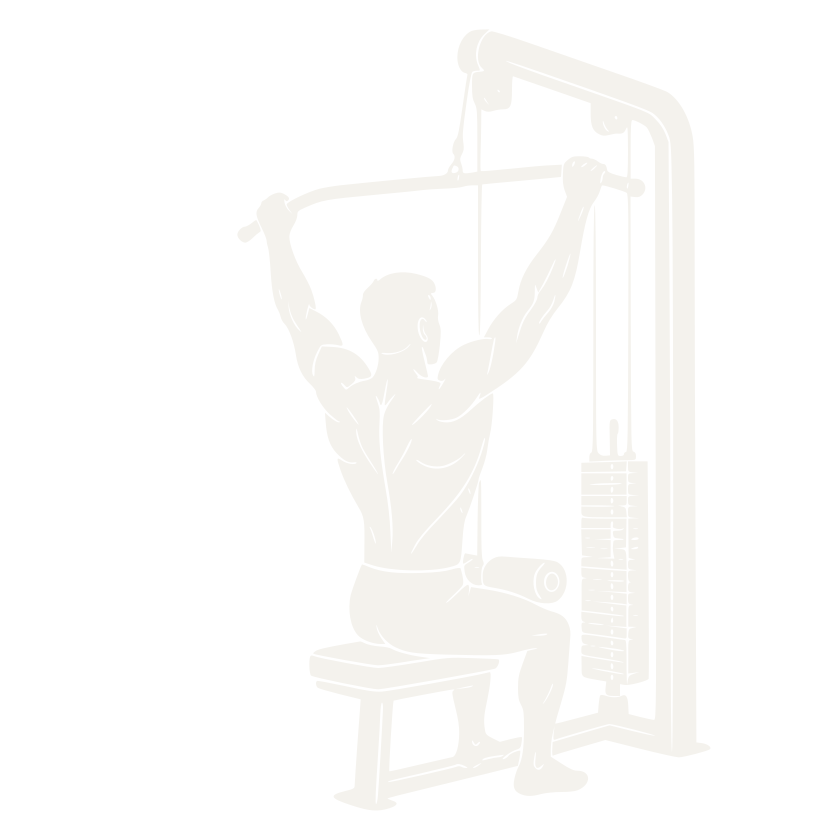 Show MovementFlow Exercise Dataset · animation and pause
Demonstration: Lat pulldown machine
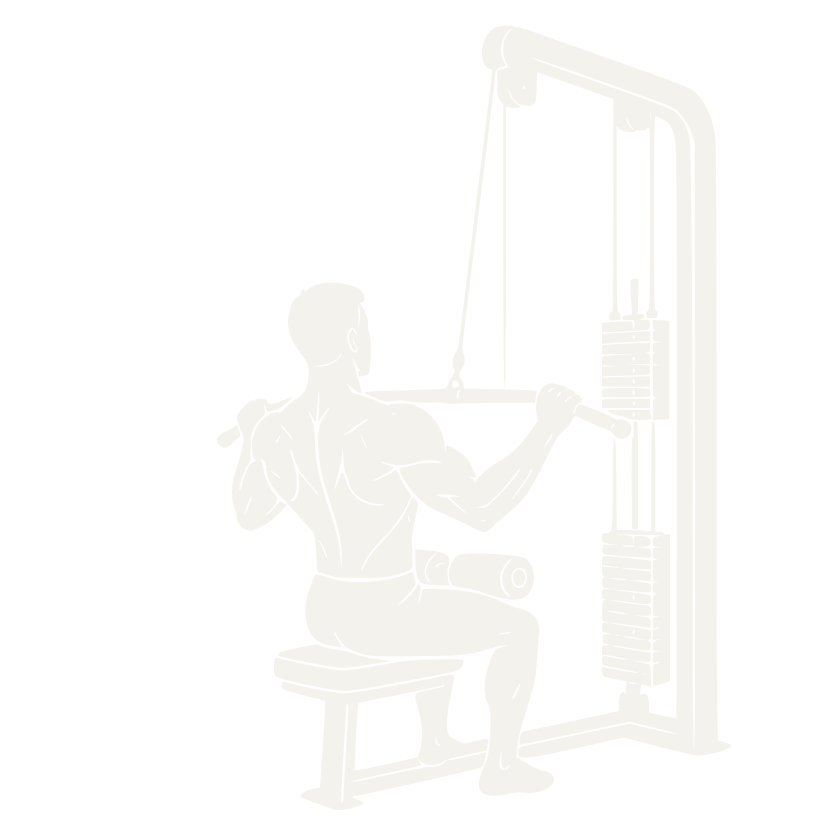
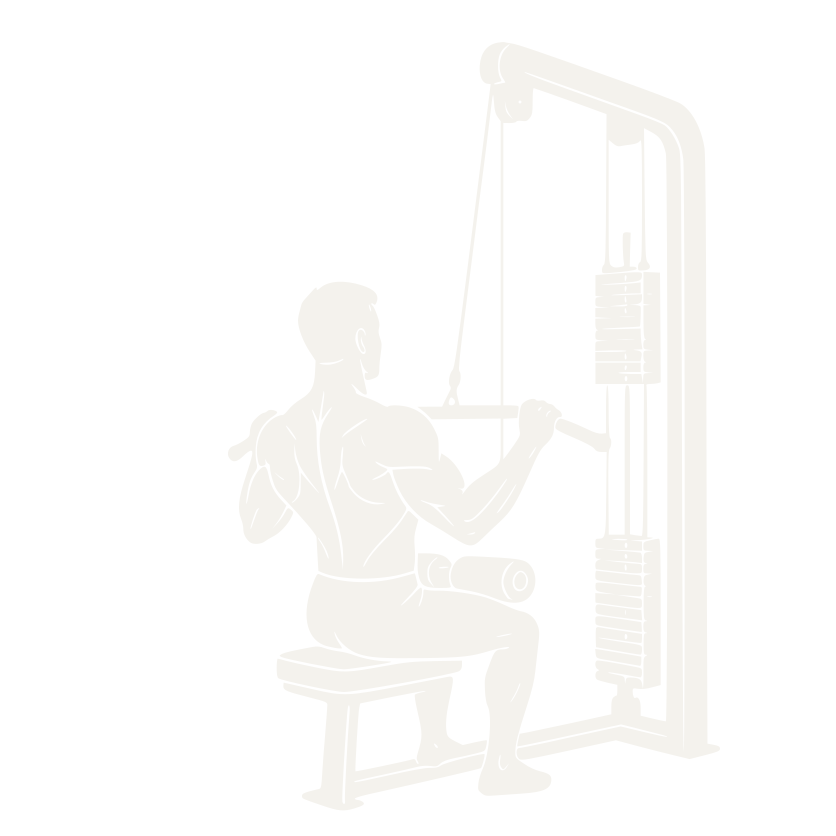
Demonstration does not change the exercise, weight, rest or set logging. Flow Exercise Dataset · Source and license
- Equipment
- Machine, Cable
- Level
- Beginner
- Primary muscles
- Lats
- Secondary muscles
- Biceps, Traps, Rhomboids
- Working range
- 8–12 reps · RIR 2
Step by step
- 1Set the thigh pads so your legs are pinned — otherwise heavier loads will lift you off the seat.
- 2Grip the bar slightly wider than your shoulders.
- 3Sit tall with a slight backward lean — no more than 15 degrees.
- 4Pull the shoulder blades down, then bring the bar to your upper chest.
- 5Return under control, letting the blades rise at the very end.
What makes the biggest difference
- Bar to the chest, never behind the neck.
- Elbows down, as if driving them into the floor.
Common mistakes
Pulling the bar behind the neck
It forces end-range shoulder external rotation and puts the neck at risk. Always pull to the front, to the chest.
Leaning back and swinging
The exercise turns into a row. If you have to lean, the weight is too heavy.
Pulling with the arms only
Start by depressing the shoulder blades, then bend the elbows.
What to do instead
No cable machine
Band-assisted pull-up
A band gives adjustable assistance and trains the same pattern.
Contraindications
- A shoulder injury limiting overhead motion — get it assessed first.
This is not medical advice. If any of these apply to you, or the exercise causes pain, talk to a doctor or physiotherapist before returning to training.
Similar exercises
Log your sets and watch the progression
You enter weight, reps and RIR — the app computes your estimated 1RM, plots the strength curve and suggests the next session’s load along with the reasoning.
Open strength log